
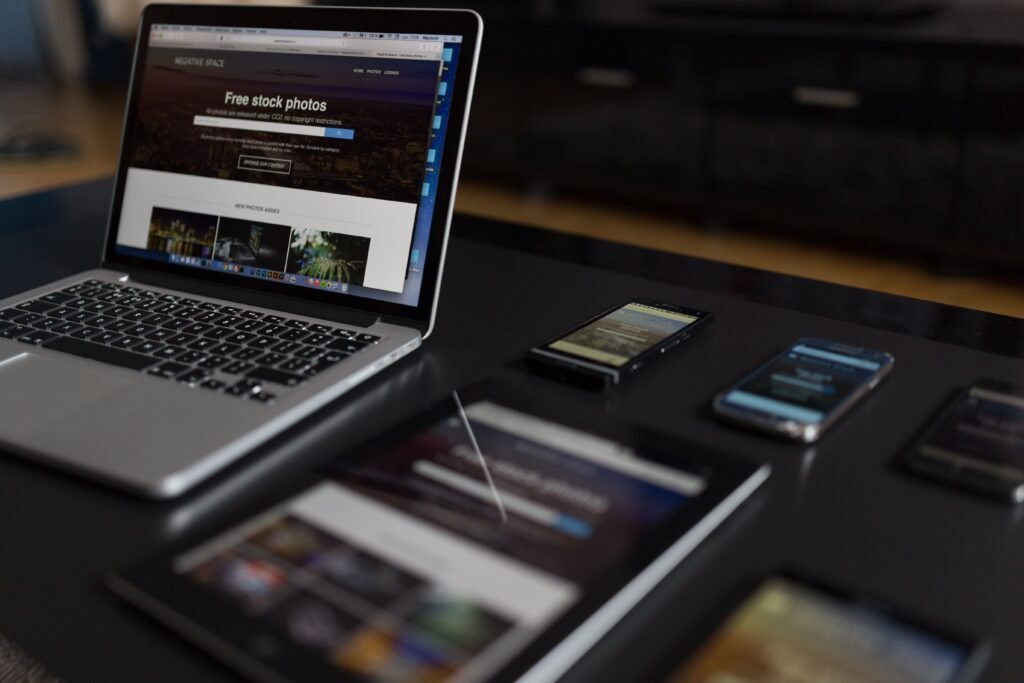
Your website is often the first place potential customers interact with your business. If it looks outdated, loads slowly, works poorly on mobile devices, or makes it difficult to contact you, visitors may leave before they ever learn what you offer. Professional Hamilton web design can help businesses create a stronger online presence while turning website traffic into genuine enquiries and sales.
A well-designed website is more than an attractive collection of pages. It should communicate your value clearly, build trust, make navigation simple, and guide visitors toward taking action. Whether you run a local service business, professional practice, e-commerce store, or growing company, the right website can become an important part of your marketing and sales strategy.
Why Professional Hamilton Web Design Matters
Customers increasingly research businesses online before making contact or purchasing. Your website therefore needs to answer their questions quickly and give them confidence that your business is worth choosing.
Professional web design can help you:
- Present your business in a credible, professional way
- Explain your products or services clearly
- Make it easier for customers to contact you
- Create a better experience on smartphones and tablets
- Support your local SEO strategy
- Generate more enquiries and sales
- Establish a consistent and recognizable brand
A visually impressive website is useful, but design should always serve a business purpose. The best approach combines appearance, usability, performance, content, and conversion strategy.
What Makes a High-Converting Business Website?
A successful business website should be designed around what customers need rather than what the business simply wants to display.
Clear Messaging
Visitors should understand what your business does within seconds. Your homepage should communicate your main service, who you help, and why someone should consider contacting you.
Avoid vague statements that sound impressive but tell customers very little. Specific, benefit-focused messaging gives visitors a reason to continue exploring.
Strong Calls to Action
Every important page should provide a logical next step.
Depending on your business, that might be:
- Requesting a quote
- Booking an appointment
- Calling your business
- Completing a contact form
- Purchasing a product
- Scheduling a consultation
Calls to action should be visible without becoming aggressive or distracting.
Mobile-Friendly Design
A large portion of website visitors may arrive through smartphones. A website that looks good on a desktop but becomes difficult to navigate on a small screen can create unnecessary friction.
Responsive design ensures that layouts, buttons, images, menus, and forms adapt to different screen sizes. This makes the site easier to use wherever customers are browsing.
Hamilton Web Design for Local Businesses
For businesses serving customers in Hamilton and surrounding areas, your website can play an important role in local customer acquisition.
Potential customers may search for services using location-based phrases and then compare several businesses before deciding whom to contact. Your website should make your location, services, service areas, and contact information easy to understand.
A strong local website can include:
- Clearly presented business information
- Dedicated service pages
- Location-specific information where genuinely useful
- Customer reviews or testimonials when authentic
- Easy-to-find contact details
- Clear service-area information
- Helpful answers to common customer questions
Local optimization should feel natural. Creating pages with little useful information simply to target different locations can make a website harder to navigate and less valuable to visitors.
SEO and Web Design Should Work Together
Search engine optimization should not be treated as something added after a website is finished. Good web design and SEO can support each other from the beginning.
An SEO-friendly website should have a logical structure, descriptive page titles, useful content, accessible navigation, and pages that address genuine search intent.
Technical performance also matters. Slow-loading pages, confusing navigation, broken links, and poor mobile usability can create a frustrating experience for visitors.
Rather than focusing on repeating a keyword such as “Hamilton web design,” build content around the broader topics customers actually care about. For example, a web design company might explain website redesigns, e-commerce websites, local business websites, website maintenance, conversion optimization, and mobile design.
This creates a more useful resource while naturally establishing topical relevance.
Features Worth Considering for Your Website
Not every business needs every feature. The right functionality depends on your customers and business model.
Useful options may include:
| Website Feature | Potential Business Benefit |
|---|---|
| Contact forms | Makes enquiries convenient |
| Online booking | Allows customers to schedule services |
| E-commerce | Supports direct online sales |
| Testimonials | Provides social proof when genuine |
| Service pages | Explains individual offerings |
| FAQ section | Addresses common objections |
| Analytics | Helps measure website performance |
| Blog or resources | Supports educational content and SEO |
The goal should be functionality with a purpose. Adding features simply because they are available can increase complexity without improving results.
Design for Conversions, Not Just Appearance
One of the biggest differences between an attractive website and a business-focused website is conversion planning.
Before designing a page, consider what you want the visitor to do next. A service page might encourage a visitor to request a quote. A product page should make purchasing straightforward. An informational article could direct readers toward a relevant service.
Trust is equally important.
Customers may look for:
- Clear business information
- Professional branding
- Transparent service details
- Real contact information
- Reviews and testimonials
- Portfolio examples
- Frequently asked questions
- Secure purchasing or enquiry processes where applicable
These elements can reduce uncertainty and make it easier for a potential customer to take the next step.
When Should You Consider a Website Redesign?
A redesign may be worth considering if your existing website is difficult to use, visually outdated, poorly optimized for mobile devices, or no longer reflects your current business.
Other warning signs include:
- Customers frequently struggle to find information
- Your contact process is unnecessarily complicated
- Important pages receive little engagement
- Your branding has changed significantly
- Your website is difficult to update
- The site does not clearly explain your current services
- Your business has changed but the website has not
A redesign should not mean changing the colours and images alone. It is an opportunity to reconsider the site’s structure, content, user journey, technical performance, and conversion opportunities.
Choosing a Hamilton Web Design Service
Selecting a web design provider is a business decision, so look beyond visual portfolios.
Before hiring a designer or agency, consider asking:
- What is included in the website project?
- Will the website be responsive and mobile-friendly?
- Who will provide and manage the content?
- How will SEO be handled?
- Will the website be easy to update?
- What happens after the website launches?
- Are hosting, maintenance, or other ongoing services separate?
- How will success be measured?
Look for a provider that takes time to understand your customers and business objectives. A good website project should begin with strategy rather than jumping immediately into colours, fonts, and page layouts.
Common Web Design Mistakes to Avoid
Several problems can reduce the effectiveness of an otherwise attractive website.
Too much information: Large blocks of text can make important messages difficult to find.
Weak calls to action: If visitors cannot see what to do next, valuable enquiries can be lost.
Poor mobile usability: Small buttons, difficult menus, and oversized layouts can frustrate smartphone users.
Generic content: Copy that could describe any business does little to differentiate your company.
Slow performance: Heavy images, unnecessary scripts, and poorly optimized pages can hurt user experience.
Design without strategy: A, content needs, e-commerce features, integrations, and ongoing services. A simple business website and a customized beautiful website still needs clear messaging and a logical customer journey.
Avoiding these issues can be just as valuable as adding new features.
Frequently Asked Questions
How much does Hamilton web design cost?
The cost varies considerably depending on the number of pages, design requirements, functionality, content needs, e-commerce features, integrations, and ongoing services. A simple business website and a customized e-commerce platform should not be expected to have the same project requirements.
How long does it take to build a business website?
Project timelines depend on scope and how quickly content, images, branding materials, feedback, and approvals are provided. A clearly defined project with prepared materials can generally move more efficiently than one requiring extensive revisions.
Is SEO included in web design?
Some web design services include basic SEO foundations, while others offer SEO as a separate service. It is worth confirming exactly what is included rather than assuming that a newly designed website will automatically achieve strong search visibility.
Can an existing website be redesigned instead of replaced?
Yes. Depending on the condition and technology of the existing website, a redesign may be possible. In some cases, rebuilding the site provides a cleaner foundation, particularly when the existing platform has technical or structural limitations.
What should a business prioritize when building a website?
Start with your customers and business goals. Clear messaging, mobile usability, fast performance, intuitive navigation, trust-building content, and straightforward conversion paths are strong foundations for most business websites.
Conclusion
Effective Hamilton web design should do more than make your business look professional. It should help potential customers understand your offer, trust your business, find the information they need, and take the next step.
Whether you need a new website or are considering a redesign, focus on the complete customer journey rather than individual design elements. Choose a website structure that supports your business goals, create useful content, make the experience easy on mobile devices, and give visitors clear ways to enquire or buy.
A strategically designed website can become a valuable long-term business asset, one that supports your brand, marketing efforts, customer relationships, and sales.